



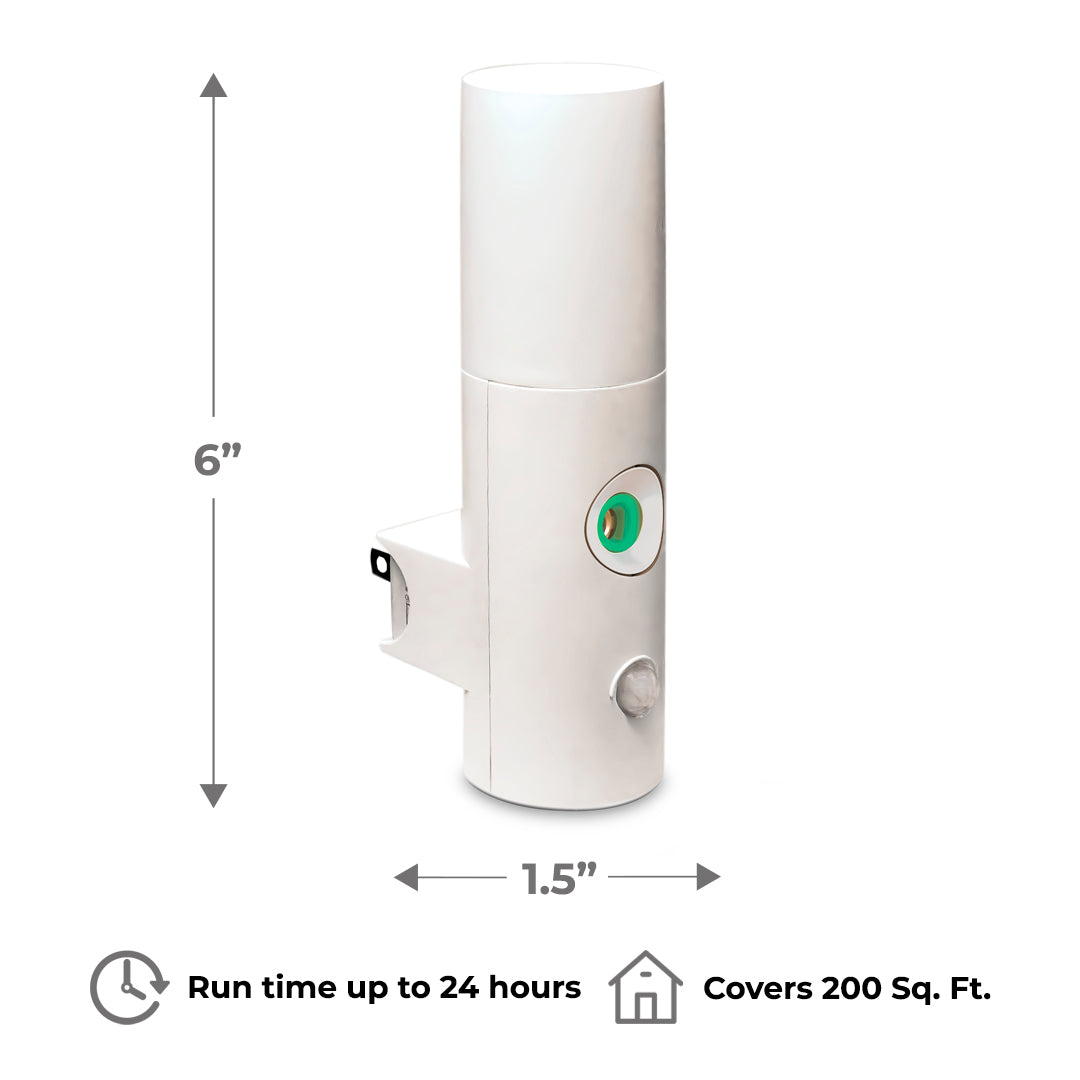
Cool Mist Waterless Plug-In Diffuser
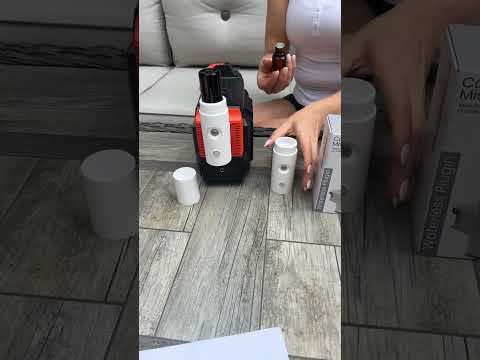
- Waterless Nebulizer: Simply insert a 15mL essential oil bottle. We include a free empty one with each purchase!
- Two Mist Modes: Choose between auto mode (3 bursts of mist every 15 minutes for 2 hours) or motion-activated mode (*recommended* - 3 bursts of mist when movement is detected, then hibernates for 3 minutes).
- Plug-In: Plug directly into wall plug.
Product Specs:
- Eco-Friendly Design: Made from recycled plastic for a sustainable choice.
- Coverage: Up to 200 Sq. Ft.
- Voltage: 5V
- Oil Capacity: 5mL, 10mL, 15mL
Click here to download user manual. Click here to learn more about our essential oils and their use.
Good to Know
The Cool Mist Waterless Wall Plugin Diffuser is a small, powerful nebulizing diffuser operating without water that plugs directly into your wall outlet. Waterless diffusion technology can suspend oil particles up to 70 minutes air the air while ultrasonic technologies less than 20 minutes. Waterless technologies have superior results with about 50% of fragrance stays in air for over 20 minutes.
Directions for Use:
- Remove the Nebulizer cover. Remove the cap from the essential oil bottle. Do not remove the oil dropper.
- Turn the diffuser upside down and screw it onto the oil bottle in place of the cap. Tighten the bottle without forcing it. 5mL, 10mL, and 15mL bottles can fit easily with cover on.
- Turn diffuser back to right-side up and gently shake to descend the oil into it. Allow 1 minute for essential oil to enter chamber before powering unit.
- Replace the cover.
- Choose setting before plugging into wall socket:
Motion Sensing (Warm White Light): When powered, the Nebulizer will spray 7 bursts, then hibernate for 3 minutes. After 3 minutes, each time the Motion Sensor detects movement, the Nebulizer will spray 3 bursts, then hibernate for 3 minutes.
Automatic Mode (Green Light): When powered, the Nebulizer will spray 7 bursts, then 3 bursts every 15 minutes. It will automatically shutdown after 2 hours in this mode.
- To remove the oil bottle installed, turn the diffuser upside down (do not remove the dropper), and wait a few minutes for the excess oil to drop back into the bottle.
Cleaning Maintenance
- Always keep the diffuser clean and dry when not in use. Never leave stagnant oil inside the diffuser.
- To prevent damage, clean the unit once a week.
- Disconnect from power before cleaning
- With essential oil bottle installed, use a moistening cotton swab of alcohol, gently rubbing the outside of the metal disc to dilute any traces there might be.
- Do not use detergents, solvents, or abrasive agents to clean the diffuser.
- Toggle the Motion/Auto function a few times until it diffusive succesive sprays of essential oils.
- The restart the device on the diffusion mode of your choice.
- NOTE: Oil mist may damage wooden and painted surface. Wipe up any residue quickly and often.
Troubleshooting
Device is not diffusing
- Oil is not 100% pure > Please only use pure essential oils, like those from Glenn Avenue Soap Company
- The power supply is not connected > Properly plug it into the wall
- There is no more oil > Replace it with a full bottle
- The metallic disc is blocked with traces of dried oils. > Clean the unit by following instructions above.
- The Oil does not flow into the unit > Shake the device several times to allow the oil to flow into the diffusion chamber.
Oil Leakage
- Essential oil bottle not tightened securely > Please check if the oil bottle is secure.
Click here to download user manual.
What is the difference between an ultrasonic essential oil diffuser and a waterless nebulizer?
An ultrasonic essential oil diffuser uses water to disperse a continuous mist of scented vapor into the air. It works by breaking down essential oils into tiny particles and releasing them with a cool mist, adding both fragrance and humidity to a space.
A waterless nebulizer, on the other hand, disperses pure essential oil without dilution. It delivers three short bursts of concentrated oil into the air, allowing the scent to linger more effectively over time. Because it doesn't use water, it provides a more potent and immediate aroma without increasing humidity.
How much space does a waterless nebulizer scent?
The coverage of a waterless nebulizer depends on the size of the room and airflow. In smaller spaces like a bathroom, the scent will be more concentrated and noticeable. In larger areas, such as a living room, the fragrance will be more subtle but still present. Even in a 400-square-foot space, you’ll detect the scent, though it won’t be as intense as a continuously running diffuser.
Since the nebulizer releases short bursts of pure essential oil, the fragrance travels beyond its immediate placement, especially in open areas or rooms with high ceilings. For example, in a living room with 14- to 16-foot ceilings, the scent can disperse well beyond 250 square feet, lingering effectively throughout the space.
How do essential oils work?
Essential oils have been used for thousands of years for their therapeutic properties. They work in two main ways:
- Through inhalation – Aromatic molecules travel through the nose, triggering reactions in the brain.
- Through the skin – Their tiny molecules absorb into the body and can be detected in perspiration, urine, and breath.
Different oils have different effects—some are calming, others anti-inflammatory, and some even boost immunity.
What is the difference between fragrance oils, essential oils, and all-natural fragrances?
- Essential Oils – Pure plant extracts obtained via steam distillation or cold pressing.
- All-Natural Fragrances – A mix of essential oils and natural ingredients. These are the only types we use.
- Fragrance Oils (Perfumes) – Can include essential oils, natural fragrances, and artificial aroma chemicals. Many brands use artificial fragrances to cut costs, but their full ingredient lists are often hidden.
Why do essential oil prices vary so much?
The price of essential oils depends on factors like plant yield, transportation costs, and growing conditions. Some plants require significantly more raw material to produce oil—for example, 1 lb. of Lavender Oil requires 1,000 lbs. of lavender, whereas 1 lb. of Rose Oil requires 600 TONS of roses!
Are your essential oils “therapeutic grade”?
"Therapeutic grade" is simply a marketing term—there is no third-party certification for essential oils. However, essential oils can be Certified Organic if they meet independent verification standards.
We source essential oils from Lebermuth (many of our Certified Organic!), a trusted supplier with over a century of experience.
How many drops of essential oil should I use in my diffuser?
A good rule of thumb is 3-5 drops per 100ml of water, but always check your diffuser’s capacity.
Are essential oils safe to ingest?
No. Unless under the guidance of a licensed practitioner, essential oils should not be taken internally, as some compounds can be toxic when ingested.
Can I apply essential oils directly to my skin?
No, essential oils should always be diluted in a carrier oil before applying to the skin. They are highly concentrated and can cause irritation if used undiluted.
Can I use essential oils during pregnancy?
Some essential oils should be avoided during pregnancy and lactation, including:
- Anise, Anise (Star), Araucaria, Artemisia vestita, Birch (Sweet), Black seed, Buchu, Calamint (lesser), Carrot Seed, Cassia, Chaste tree, Cinnamon bark, [ please note that we use Cinnamon Leaf, not bark ] Costus, Cypress (Blue), Dill seed (Indian), Fennel (bitter), Fennel (sweet), Feverfew, Genipi, Hibawood, Ho leaf, Hyssop, Lanyana, Lavender (Spanish) [ please note that we use Bulgarian Lavender or 40/42 Lavender sourced from USA ] Mugwort, Myrrh, Myrtle, Oregano, Parsely Leaf, Parsleyseed, Pennyroyal, Rue, Sage (Dalmation), Sage (Spanish), Savin, Tansy, Thuja, Western red cedar, Wintergreen, Wormwood, Yarrow, Zedoary
Others should be used in limited amounts. (We include Maximum dermal dose recommendation after each essential oil:
- Basil (lemon) 1.4%, Boswellia papyrifera 1.7%, Champaca (orange) absolute 17.5%, Lemon balm (Australian) 3.4%, Lemon leaf 1.2%, Lemongrass 0.7%, May chang 0.8%, Melissa 0.9%, Myrtle (honey) 0.9%, Myrtle (lemon) 0.7%, Nasturium absolute 0.26%, Tea Tree (lemon-scented) 0.8%, Thyme (lemon) 3.7%, Verbena (lemon) 0.9%
Always consult a healthcare provider before using essential oils during pregnancy.
What does “dermal use limit” mean?
This is the maximum recommended percentage of an essential oil that can be applied to the skin. Our guidelines are based on Essential Oil Safety by Robert Tisserand & Rodney Young, the industry standard for safe use.
If you experience irritation, discontinue use immediately. If using prescription topical medications, apply essential oils to a separate area of skin.
Who supplies your essential oils?
We source our essential oils from Lebermuth, a company with over 100 years of expertise in high-quality essential oils.
For more information and recipes, check out our comprehensive Essential Oil Guide.
Choose options
Natural & Genuine
Simple, plant-based ingredients and traditional methods
Learn More
$5 Flat Rate Shipping
Pay just $5 and we'll ship anywhere within the United States
See Shipping Policy
Happy Policy
Order with confidence, we ensure you are happy and satisfied!
See Return Policy
Customer Care
Have a product question, order issue or comment to share?
Reach us here!
We've added a free gift to your cart.
The free gift has been removed as your cart no longer qualifies.
You now qualify for a free gift with your order.